Now that the Premier League is several weeks into the new season, it’s worth looking back at what the opening weekend told us about the appetite for top-flight football and what it means for the broadcasters who hold the rights. Slightly later than usual, to give players who had been at the World Cup some time to hit the beach before returning to the pitch, the EPL returned at the end of August with a Friday night match, kicking of a bumper weekend of 7 televised matches.
And coming off the back of the Premierships most successful ever season in 2025/26 in which Sky delivered a 25% increase in tv viewing (helped by it being the 1st year of a new rights deal which allowed more tv matches), and buoyed by £3.5 Billion of player transfer fees, the pressure was on to hit the ground running!
The opening Friday night game, a clash between the reigning champions Arsenal and newly promoted Coventry City who were making their return to the top flight for the first time in 25 years, attracted an average audience of over 1.1* million viewers across 4 and a half hours of coverage on both Sky Sports Main Event and Premier League channels. An impressive start. Viewing peaked during the match itself at double that number.
.png)
Across the entirety of the opening weekend Sky transmitted another 5 live matches with TNT Sport also showing the Saturday lunchtime match between Hull and Manchester United which attracted 600k viewers. The second of Sky's ‘Super Sunday’ matches with Newcastle United hosting Liverpool at St. James Park attracted the biggest audience of the weekend, an average tv crowd of 1.8 million - split between 1.2 million on Main Event and 600k on Premier League - with viewing peaking at 2.5 million.
%20(1).png)
The impact on Sky Sports viewing of the return of the EPL was instantaneous; since the previous season concluded at the end of May, deprived of the big audiences delivered by Premiership football, Sky Sports Main Event channel attracted only around a 1% viewing share across the summer while the Premier League channel, relying on an even more restricted diet of round the clock re-runs of matches from the previous season, rarely troubled the scorers at all.
With the EPL returning to their schedules, viewing share for the Main Event and Premier League channels leapt up across the opening weekend; on Sunday between them, the two channels attracted a near 10% share - a higher share of viewing across the day than every other channel bar BBC1. Such is the broadcast power of football.
.png)
Digging deeper into the numbers, the attraction of live Premiership football to some key demographics is even more striking. The Newcastle v Liverpool match on Sunday afternoon for instance attracted a viewing share of more than 20% of all individuals while it was on air, but for young men - defined for advertising purposes as between 16 and 34 and one of the most commercially valuable demographics - it soared to 60%.
Part of the value of live football for a broadcaster lies in the sheer length of the event, with build-up beforehand and analysis afterwards, the entirety of the coverage on a subscription channel can last more than three times the length of a normal ninety minute match, ie lots more opportunities for ad breaks!
But highlights of Premier League matches also have real value, not least to the League themselves who insist they are shown free to air to maximise exposure with football fans who don’t have a subscription to Sky Sports. The BBC have had those rights for over twenty years now since ITV’s ‘snatch of the day’ poached both the highlights and star sports presenter Des Lynam from them. Like many a big money transfer in the world of football however, it didn’t work and highlights returned to the BBC for the 2004/05 season which is where they have remained ever since.
The BBC may not run adverts, but the two editions of Match of the Day on the opening weekend delivered very healthy audiences. Including catch up viewing on iPlayer, the total audience for the Saturday night programme was 2.2 million - one of the biggest audiences of the day (plus another 700k for the early morning repeat the next day) while 1.6 million tuned in on Sunday night, also on BBC1.
Beyond highlights however, live matches have been locked behind a pay wall since the Premiership came into existence in 1992, with the exception of the Covid impacted 2020/21 season. (As part of ‘Project Restart’ a limited number of matches were shown on BBC1, one of which Southampton v Manchester City holds the record for the most watched ever Premiership match, a peak audience of almost 6 million.)
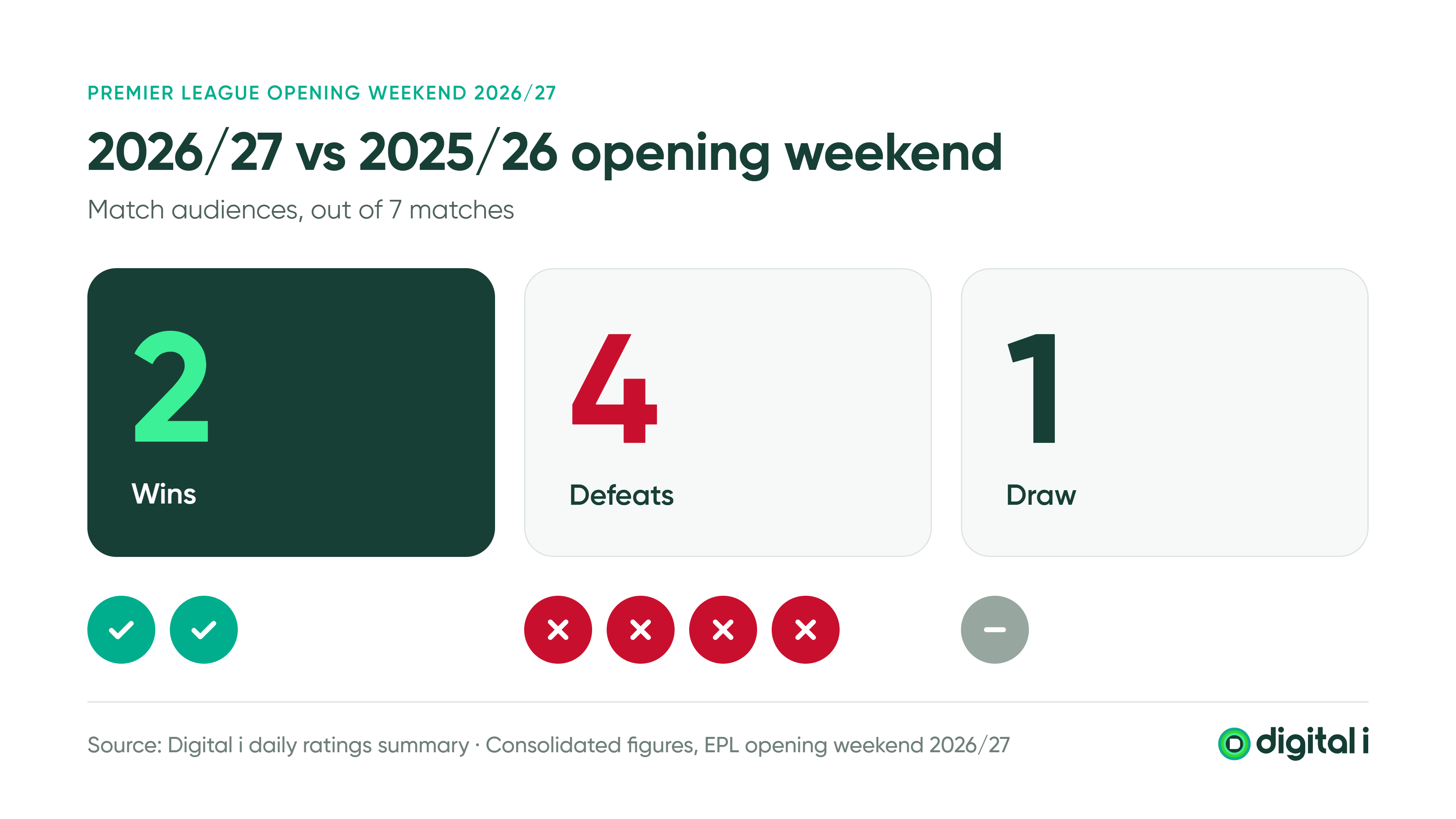
Overall, the opening weekend of the 2026 season ended marginally behind last years record breaker - 2 of the 7 matches delivered bigger audiences than the equivalent last year, 4 were down and 1 was a ‘score draw’ - but, with the league already looking more competitive than ever and with Manchester City controversy sure to drive audiences to their matches, Sky will be rubbing their hands at the commercial return on their investment in top flight football which is heading their way.
Looking beyond this season, the potential value of both live Premiership matches and the highlights to a commercial, ad-funded channel is enticing, and with Sky Sports owner Comcast on the verge of closing a deal to acquire ITV’s broadcast assets could that happen? By the opening of the 2027 season could Sky decide that returning some Premiership matches to a free to air channel makes good marketing sense… Perhaps as part of an EPL package which sees highlights ‘snatched’ back to ITV too?
Guest blog written by Liam Hamilton for Digital i using Digital i data
* All audience numbers quoted are for consolidated viewing.
.png)